• Ingredient Glossary & Guides
    • The Best Beauty Ingredients You Will Love Glossary Guide
    • Skincare Ingredient Guides
  • Beauty
    • Better Beauty Sleep
    • Beauty Expert Advice
    • Clean Beauty
    • Cosmetics
    • How to…
    • Discontinued Clinique
    • Makeup Tools & Brushes
    • Science of Beauty
  • Haircare
    • Hair Growth
    • Hair Growth Devices
    • Hair Maintenance Products
    • Hair Styling Tools
    • Haircare Tools
  • Skincare
    • Adult Acne
    • Anti-Aging
    • Skin Devices & Topicals
    • Skin Tools & Devices
    • Science of Skincare
    • Waterless Beauty
  • Contact
  • About
    • About Our Features: How Our Product Reviews are Unique
    • Disclaimer
    • Disclosures
    • Privacy Policy
    • Terms of Use

Style Chicks

Expert Beauty Reviews | Skincare Ingredient Guides

You are here: Home / Archives for Science of Beauty

How Ingredients Work


The Science of Beauty

We investigate which ingredients are effective and why. We read the Clinical studies and research to back ingredient and product efficacy claims.

How to Best Use Rosemary Oil for Hair Growth

July 28, 2021 · Leave a Comment

There are many hair growth remedies that are applied to the scalp. Most provide nutrients to the follicle, promote circulation or clear dry flakes.  Few address hair fall due to androgenetic alopecia. Androgenetic alopecia is quite common. A clinical study shows Rosemary Oil helps this specific type of hair loss.

The internet is full of antidotical evidence of various oils that grow hair. Some swear by Black Cumin, Castor, Coconut, and Amla oils. And if it works, we say more power to you. But not all hair growth needs are equal. What works for your bestie may not address your hair growth needs.

Rosemary

WHY YOUR HAIR ISN’T GROWING

Some of us can’t seem to grow longer hair because it is breaking faster than its’ growing. Brittle hair responds well to moisturizing oils such as Coconut, Sunflower, Amla, Avocado and Grapeseed Oils. These moisturizing oils make hair more elastic and resilient to reduce breakage. Less breakage retains existing length.

Others of us can’t grow fuller, longer hair due to scalp or follicle health. In these cases, hair fall is preventing hair growth.

Rosemary Extract stimulates and promotes better blood circulation to deliver the nutrients necessary to build hair. It also has natural antiseptic properties and is a gentle exfoliant for dead skin flakes.

But that isn’t all. An exciting study demonstrated Rosemary Oil is as effective as Minoxidil for hair growth stimulation without the chemical side effects.

SCIENCE TO THE RESCUE

Research proves Rosemary Oil is as effective as Minoxidil for hair growth stimulation without all the chemical side effects. Rosemary oil applied to the scalp combats a specific type of hair loss (androgenetic alopecia).
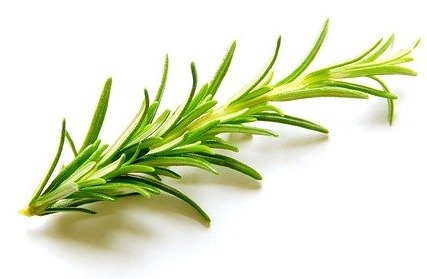
Rosemary

The study ran for six months. Some used Rosemary Oil, others Minoxidil.

At the three month mark, no changes were detected in either group. But at the six month mark, there was less itching in the Rosemary group than the Minoxidil group. Itchiness is a known Minoxidil side effect. The study showed massaging the scalp for six months with Rosemary oil and carrier oil is as effective as 2% Minoxidil at regrowing hair. [1]

Another study found the 12-methoxycarnosic acid in Rosemary promising for treating male pattern baldness caused by the testosterone conversion to DHT on the scalp. DHT is a hormone that accumulates on the scalp. If not removed, it smothers hair follicles until they can no longer grow hair. Rosemary can help.

The study concluded “These results suggest that they inhibit the binding of dihydrotestosterone to androgen receptors”. [2]

Hair Products containing Rosemary

Some hair growth products with rosemary extract in their formulations that we especially like:

Provence Beauty Damage Repair Hair Treatment Oil contains Rosemary and Jojoba plus Grapeseed Oil, Black Cumin Oil and Sunflower Seed Oil. It is a very versatile oil, good for a daily scalp massage, leave-in conditioner, hair treatment oil, or a few drops applied as a finishing hair smoother. I like to add this oil to a basic conditioner to make my own hair masque. Massage it onto the scalp 30 minutes before washing for a nourishing scalp treat.
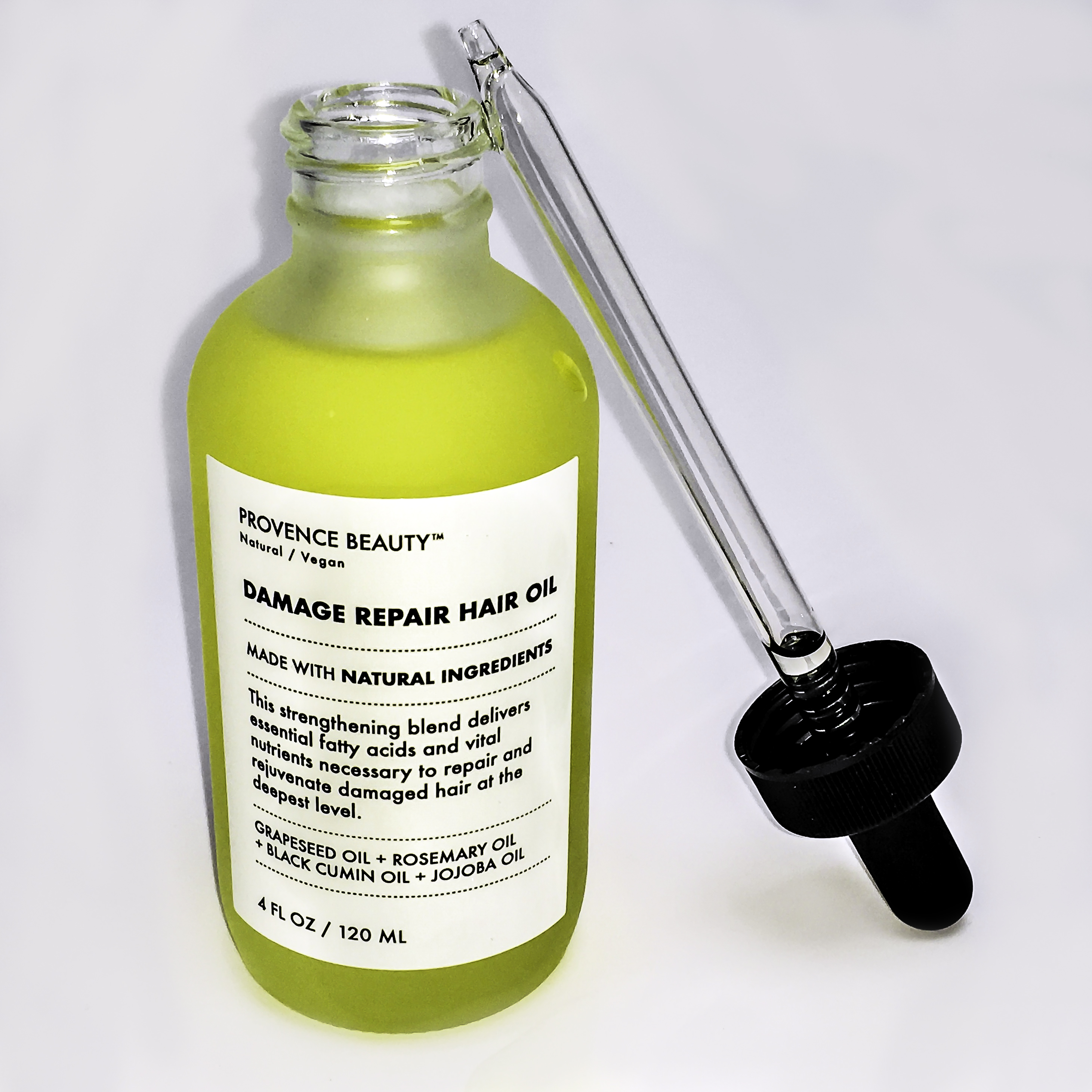
Provence Beauty Damage Repair Hair Oil

Provence Beauty Damage Repair Hair Oil

Read more details here:

Hair Oiling: Provence Beauty Damage Repair Hair Treatment Oil

Hairmetto Saw Palmetto Oil for Hair Growth is a scalp treatment that contains researched-backed natural ingredients help to hair growth including Rosemary, Saw Palmetto, Lavender, Castor, and Pumpkin Seed Oils.

Read more details here:

Scientifically Sound Natural Alternative for Hair Loss: Hairmetto Saw Palmetto Oil For Hair Growth


REFERENCES

  1. Skinmed. 2015 Jan-Feb;13(1):15-21. Rosemary oil vs minoxidil 2% for the treatment of androgenetic alopecia: a randomized comparative trial. https://www.ncbi.nlm.nih.gov/pubmed/25842469
  2. Murata K, Noguchi K, Kondo M, et al. Promotion of hair growth by Rosmarinus officinalis leaf extract. Phytother Res. 2013;27(2):212-217. doi:10.1002/ptr.4712

About this Post

Style Chicks independently researches active ingredients to understand how they work and if they are effective. We cite only reputable, peer-reviewed journals and show our research in the References section of each article.

Posted by Style Chicks / Filed In: Beauty, Ingredient Guides, Science of Beauty
Tagged: Clinical Study, Grow Hair, Hair Growth, Rosemary Oil

Science of Skincare: The GroundBreaking Collagen & Skin Elasticity Study For Ninja Level Anti-Aging

February 26, 2020 · 2 Comments

Amongst the countless skincare products and procedures out there, what REALLY restores collagen? A recent study revealed facts that may alter what products you use in the fight against dull, aging skin.

The Collagen Conundrum

There are many collagen types in our body. Each collagen type has a function. Effective anti-aging skincare is not just restoring some form of collagen on areas of visible aging. It requires producing the right kind of collagen in the right place. This gives skin resilience and elasticity. Tricky, right?

We knew the deeper the skin can be stimulated to produce new collagen, the less facial sagging there will be.  That’s still true, but now there is more intel.

The Super Science-y Skin Study

A groundbreaking skin study revealed the composition of live young and aging skin.  It looked at the baby collagen in the skin. It noted the changes in elasticity with age in the twenties, thirties, and forties.

Special technology imaged the internal elasticity of the skin. It noted the concentration of the individual collagen fibers. They located which ones made skin elastic, taut and youthful. The location and impact of these concentrated collagen clusters were new information.

“The team also studied how the variations in skin elasticity in the papillary dermis would change the look of the skin and discovered that the skin surface of females without any signs of variations in elasticity was more likely to be smooth, whereas that of females with decreased elasticity looked slightly rough” [1]

The Result

The result? Now we know exactly WHERE we need to restore collagen. And we know which type of collagen rejuvenates skin and keeps it “springy”

“The team has found out that type III collagen is abundant in the areas with healthy skin elasticity in the uppermost layer of the dermis, but it decreases in the parts where the skin elasticity has deteriorated. This suggests that the decrease in type III collagen triggers the decrease in skin elasticity” [2]

In sum: what makes skin healthy, elastic and vibrant is collagen III within the dermal cells of the papillary dermis skin layer.

And the study identified the exact ingredient to accomplish the task. It is an ingredient that appears in skincare brands like Shiseido and Tatcha. It is also a natural ingredient that can be organically farmed. It’s Watercress. Yep, Watercress.

Watercress helps makes Type Collagen III in dermal cells

Watercress helps makes Type Collagen III in dermal cells

what to do About It

Henceforth, beauty buddies, we tackle anti-aging with the precision of a vapid ninja.

We‘re featuring select products using Watercress to best advantage to precisely target Collagen III production in the proper dermal cells.

And there are some great skin products in this lineup, including an all-natural Beauty Superfood oil with a Watercress base.


References

  1. Shiseido Succeeds in Visualization of Internal Skin Elasticity – Decrease of Type III Collagen Involved in Age-Dependent Degradation in Skin Elasticity. Shiseido, Shiseido, Apr. 2018, corp.shiseido.com/en/newsimg/2423_c3b40_en.pdf.
  2. Ibid


Posted by Style Chicks / Filed In: Anti-Aging, Beauty, Green Beauty, Ingredient Guides, Science of Beauty, Science of Skincare, Skincare
Tagged: Baby Collagen, Collagen III, Internal Skin Elasticity, Shiseido, Shiseido Research, Watercress, Watercress for skin

Ask The Expert: Doctor Sharon Wong from Get Ahead of Hair Loss

September 17, 2019 · 12 Comments

Since we launched our blog in 2007, Style Chicks has covered women’s hair loss. It is a subject that isn’t openly discussed. This leads to viable solutions not being considered for both men and women who are suffering hair loss who do not need to be.

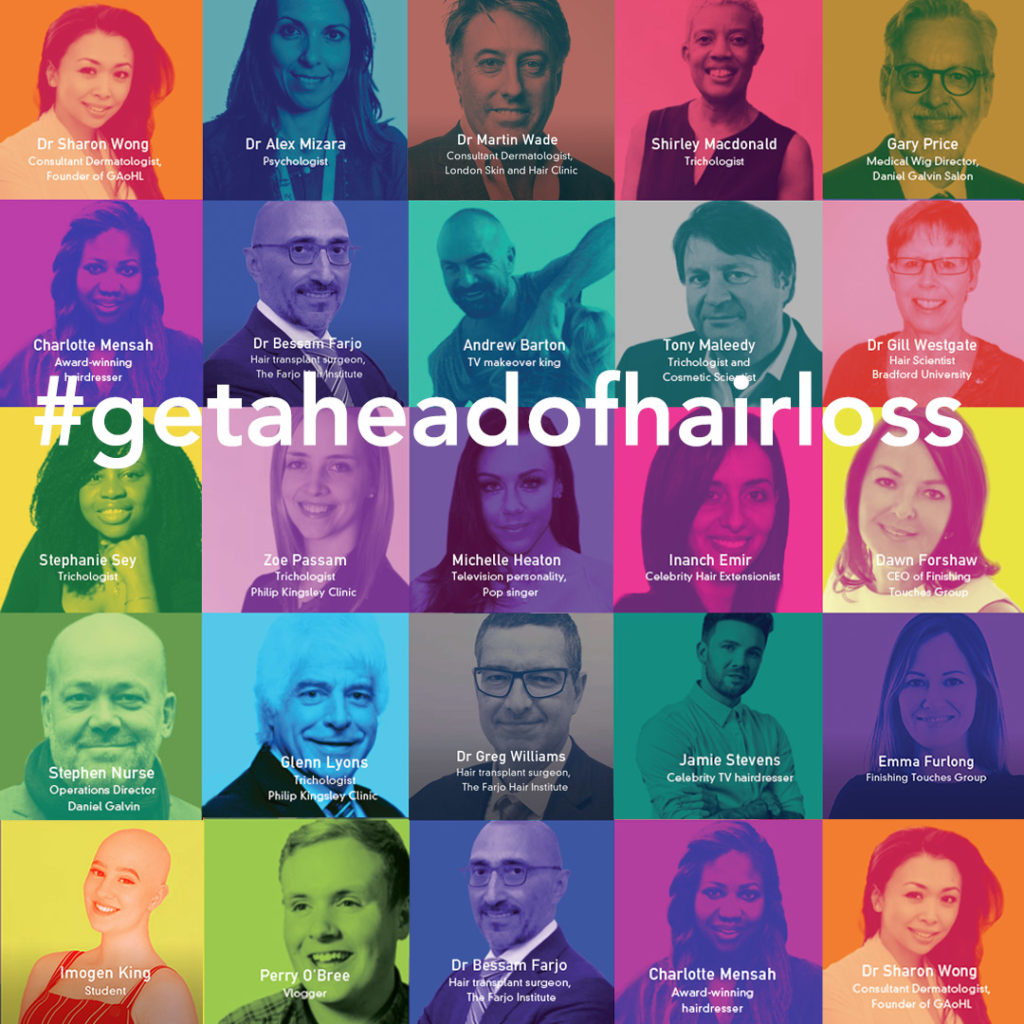
That is why Doctor Sharon Wong founded Get Ahead of Hair Loss. This annual conference is a public education event that brings together leading experts from the UK in the field of hair loss.

Get Ahead Of Hair Loss Speakers

Get Ahead Of Hair Loss Speakers

We had the opportunity to ask Doctor Wong a few questions:

1) From your standpoint, what is the most exciting new development in the fight against hair loss?

For me, cell regeneration technology will transform the way hair loss will be treated in the near future, regardless of the cause of hair loss. There are a number of different techniques but essentially they all involve harvesting cells which have the ability to form new hair follicles, expanding the number of those cells and reinjecting back into that person’s scalp. These cells could be stem cells or dermal papilla cells from the hair follicle or stem cells derived from fat.

2) What would you say to the women reading this that are experiencing hair loss and feel too embarrassed to talk about it?

Hair loss is common and you are definitely not alone. It is important to recognize that when hair loss is starting to have a negative effect on you/your life then it’s time to do something about it and there is absolutely no shame in having or talking about hair loss. More often than not there will be something that can be done to support someone with hair loss whether this be medical, cosmetic and or psychological support.

Get Ahead of Hair Loss 2019

Get Ahead of Hair Loss 2019

Are you interested in attending Get Ahead of Hair Loss?

Regular ticket price is $89, but Style Chicks readers can get the special rate of $69 with the code GAOHL2019.

Learn more at https://www.GetAheadOfHairLoss.com and if you will be in the UK on September 22nd, definitely consider attending!

Posted by Style Chicks / Filed In: Beauty Expert Advice, Hair Growth, Health, How to..., Science of Beauty
Tagged: Ask The Expert, Beauty Events, Doctor Sharon Wong, Get Ahead of Hair Loss, Hair Loss

Science of Beauty: Why Use Mandelic Acid for Acne to Anti-Aging

July 1, 2019 · 5 Comments

Acne is the most common skin condition in the United States.
No acne treatment overview would be complete without Mandelic Acid.


Retinol is still the gold standard for acne. But peeling acids are more common in acne and acne scar treatment. And Mandelic Acid is an ingredient worthy of your attention. It gets the results of a robust acid but with little to no skin irritation.

WHAT IS MANDELIC ACID?

Mandelic acid is a natural ingredient that comes from bitter almonds

Mandelic acid is a natural ingredient that is extracted from bitter almonds

Mandelic acid is a very gentle AHA (Alpha Hydroxy Acid).

Mandelic acid penetrates the skin slowly, making it suitable for even sensitive skin. While it is an “acid” it is very gentle and rarely causes skin irritation.

Mandelic acid is natural, clean, green, and skin-friendly.

It is useful in organic skin care product formulations.

HOW MANDELIC ACID WORKS: ACNE TO ANTI-AGING

Mandelic acid accelerates cell turnover by dissolving the tiny bonds that hold skin cells together. This microexfoliation accomplishes several skincare objectives.

ACNE

Mandelic acid is useful in acne treatment. Mandelic acid removes bacteria-trapping dead skin, which contributes to acne formation. Dead skin also dulls the complexion and makes fine lines look worse. Removing dead skin cells brightens skin. It is anti-bacterial, anti-fungal, and anti-inflammatory. If you have adult acne, Mandelic acid is ideal to treat both acne and signs of skin aging. (1)

ANTI-AGING

Mandelic acid an appealing ingredient within anti-aging products. Mandelic acid is helpful for smoothing mesh-like pattern wrinkles. Mandelic acid promotes collagen production. More collagen increases skin’s elasticity and youthful appearance. Collagen counteracts sun damage by smoothing and refining the skin surface. Sun damage is the largest cause of visible signs of aging.

Mandelic acid reduces hyperpigmentation. It lightens acne scars, sun damage, and age spots.

MANDELIC ACID VS GLYCOLIC ACID

Both acids are highly effective at causing rapid cell turnover. Both reveal younger, smoother, brighter skin. Both acids dissolve the “glue” holding dead skin cells. Both remove dead skin cells without forceful scrubbing. Both Mandelic Acid and Glycolic Acid are ideal for skin unable to tolerate harsh exfoliants.

A difference between the acids is that Mandelic acid has a larger molecular structure than glycolic acid. Smaller molecular structures penetrate the skin faster and deeper.  (2) If the skin can tolerate glycolic, that’s great. But if the skin gets irritated by Glycolic acid, Mandelic acid is an ideal option. The larger molecular structure of Mandelic Acid gets the job done, albeit a tad slower. Mandelic is kinder to the skin. There is little to no irritation and redness with regular Mandelic Acid use. (3)


MANDELIC ACID TIPS FOR BEST USE

  • Skin using AHAs, including Mandelic Acid, is more sensitive to light. Always wear sunscreen
  • To avoid irritation, choose products with 10% or less Mandelic Acid concentrations

HYPERPIGMENTATION

Some hyperpigmentation fading ingredients work best on pink undertone skin. Mandelic Acid works on the hyperpigmentation of all skin tone types. Mandelic Acid inhibits melanin production in existing scars, age spots, and acne marks. (4) This reduces hyperpigmentation of all types on all skin tones.

Mandelic Acid: A Holy Grail Ingredient

Mandelic Acid earns our “Holy Grail Ingredient” rating. It reduces sun damage, acne, and hyperpigmentation. It gently exfoliates and improves skin texture. It works on all skin tones and textures, including mature and sensitive skin. It is natural and suitable for organic product formulations. A Style Chicks skincare superstar!


REFERENCES

  1. Debowska, Renata & Kaszuba, Aleksandra & Michalak, Iwona & Dzwiga‚owska, Agata & CieÅ›ciÅ„ska, Czanita & Jakimiuk, Elżbieta & ZieliÅ„ska, Joanna & Kaszuba, Andrzej. (2015). Evaluation of the efficacy and tolerability of mandelic acid-containing cosmetic formulations for acne skin care. Dermatology Review. 4. 316-321. 10.5114/dr.2015.53419.
  2. Garg VK, Sinha S, Sarkar R. Glycolic acid peels versus salicylic-mandelic acid peels in active acne vulgaris and post-acne scarring and hyperpigmentation: A comparative study. Dermatol Surg 2009;35:59-65.
  3. Taylor MB. Summary of mandelic acid for the improvement of skin conditions. Cosmet Dermatol 1999;12:26-8
  4. Kessler E, Flanagan K, Chia C, Rogers C, Glaser DA. Comparison of alpha- and beta-hydroxy acid chemical peels in the treatment of mild to moderately severe facial acne vulgaris. Dermatol Surg 2008;34:45-50.

Posted by Style Chicks / Filed In: Green Beauty, Ingredient Glossary, Science of Beauty, Science of Skincare, Skincare
Tagged: Acne Scars, Holy Grail Skincare, How to Use Mandelic Acid for Acne, How to Use Mandelic Acid for Anti-aging, Mandelic Acid, Skincare Anti-Aging

  • 1
  • 2
  • Previous Entries

Search Style Chicks

Pages

  • About the Style Chicks
  • Contact Us
  • Discontinued Clinique Products Guide Lost Clinique You Love
  • The Best Beauty Ingredients You Will Love Glossary Guide

Review + Guide Topics

  • Accessories
  • Adult Acne
  • Anti-Aging
  • Beauty
  • Beauty Expert Advice
  • Beauty Tools + Devices
  • Better Beauty Sleep
  • Black Friday & Cyber Monday
  • Body
  • Clean Beauty
  • Cosmetics
  • Curly Hair Care
  • Decor
  • Discontinued Products
  • Entertaining
  • Essential Oils
  • Exercise
  • Fashion
  • Featured
  • Food
  • For the Home
  • Fragrance Free
  • Gadgets
  • Gifts
  • Green Beauty
  • Gym Beauty Bag
  • Hair
  • Hair Care Devices & Tools
  • Hair Growth
  • Hair Growth Devices
  • Haircare
  • Health
  • How to
  • How to…
  • Ingredient Glossary
  • Ingredient Guides
  • J-Beauty
  • Jewelry
  • K-Beauty
  • Life Hacks
  • Lifestyle
  • Makeup
  • Makeup Tools & Brushes
  • New Products
  • News
  • Organic
  • Pre-Shampoo Hair Treatments + Conditioning Remedies
  • Product Review
  • Product Updates
  • Science of Beauty
  • Science of Skincare
  • Sensitive Skin
  • Sephora
  • Shoes!
  • Skin Tools & Devices
  • Skincare
  • Spa Economy
  • Style
  • Tea
  • Technology
  • Things I want
  • Travel
  • Unscented
  • Vanity Table
  • Waterless Beauty
  • Weddings

Welcome to Style Chicks

Since 2007, we are your trusted source for expert hair and skincare reviews, in-depth ingredient guides, and info on hard-to-find and discontinued beauty products. Whether you're looking for smarter skincare choices, hair growth options, clean beauty cosmetics reviews, ingredient glossary, better beauty sleep, hair care tips, beauty how-to guides or trying to track down your holy grail favorite, we’ve got you covered.


Copyright © 2007 - 2025 STYLE CHICKS