• Ingredient Glossary & Guides
    • The Best Beauty Ingredients You Will Love Glossary Guide
    • Skincare Ingredient Guides
  • Beauty
    • Better Beauty Sleep
    • Beauty Expert Advice
    • Clean Beauty
    • Cosmetics
    • How to…
    • Discontinued Clinique
    • Makeup Tools & Brushes
    • Science of Beauty
  • Haircare
    • Hair Growth
    • Hair Growth Devices
    • Hair Maintenance Products
    • Hair Styling Tools
    • Haircare Tools
  • Skincare
    • Adult Acne
    • Anti-Aging
    • Skin Devices & Topicals
    • Skin Tools & Devices
    • Science of Skincare
    • Waterless Beauty
  • Contact
  • About
    • About Our Features: How Our Product Reviews are Unique
    • Disclaimer
    • Disclosures
    • Privacy Policy
    • Terms of Use

Style Chicks

Expert Beauty Reviews | Skincare Ingredient Guides

You are here: Home / Archives for Lordsbury Retinol+C Cream Moisturizer

Ingredients to Optimize Retinol Use: A Close up of Lordsbury Retinol+C Cream Moisturizer

December 17, 2017 · 18 Comments

We’ve all heard it: Retinol is a miracle worker of anti-aging, and we see it on the ingredient list in products ranging from cheap drugstore brands to luxury spa products to mass-market chains, dermatologists offices, and all the way to the cosmetic counters at Barneys, Neiman Marcus and Bergdorfs. What accounts for the differences in efficacy and price? Two factors: the strength of the Retinol and the products other supporting ingredients such as Vitamin C, Hyaluronic Acid, or Jojoba. These Most Valuable Players of skincare are the real test of how well any given Retinol will work for you and if it is worth its’ price. Let’s take a closer look at some of the ingredients you do – and don’t – want to see on a Retinol’s ingredient label.

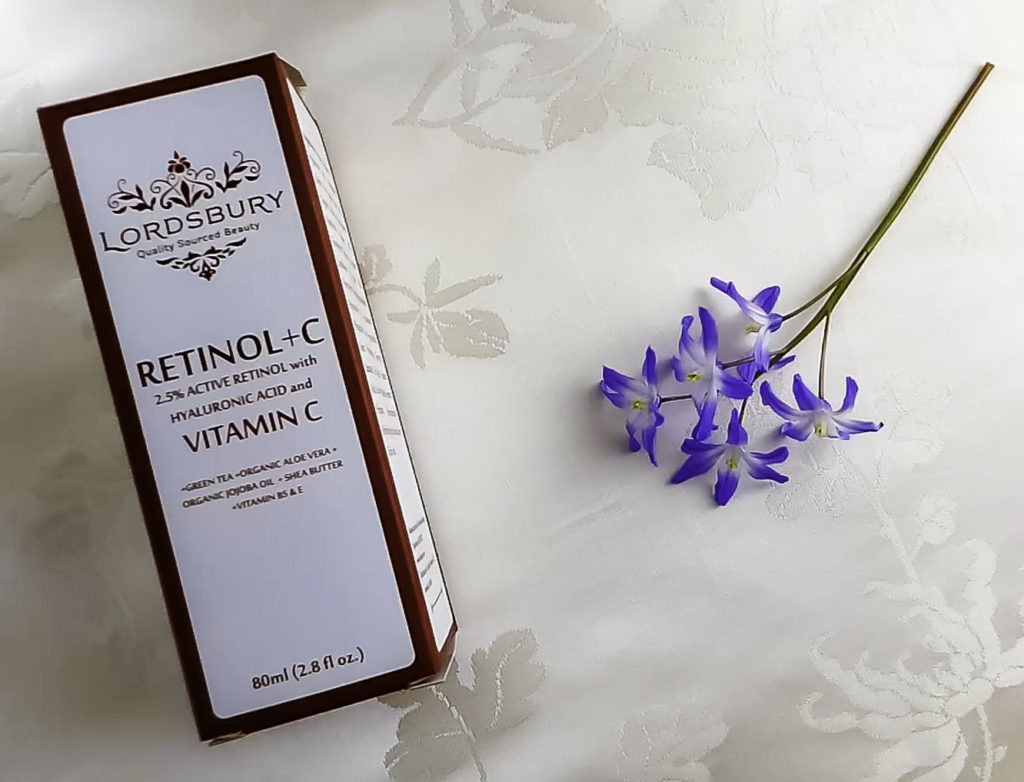
Lordsbury Retinol+C Cream Moisturizer contains 2.5% Pure Retinol, 20% Vitamin C, Hyaluronic Acid, Jojoba, Wildcrafted Green Tea, Shea Butter and many other Retinol enhancing ingredients

Lordsbury Retinol+C Cream Moisturizer contains 2.5% Pure Retinol, 20% Vitamin C, Hyaluronic Acid, Jojoba, Wildcrafted Green Tea, Shea Butter and many other Retinol enhancing ingredients

ALL-IN-ONE RETINOL

Let’s cut to the chase: Is there a Retinol that combines ALL of the good Retinol ingredient pairings? Yes. For an all-in-one Retinol product, we find Lordsbury Retinol+C Cream Moisturizer to be a highly effective combination of ingredients to best support the many skincare benefits of a good Retinol. It combines a prescription strength 2.5% Retinol with 20% Vitamin C Serum, Hyaluronic Acid, along with multiple buffering moisturizers including nourishing Jojoba Oil, calming anti-oxidant Wildcrafted Green Tea, calming Aloe Vera, Shea Butter, Cocoa Butter and many more.

How does each of these ingredients work in tandem with Retinol to increase its’ overall efficacy? Here are some details about these key player ingredients.
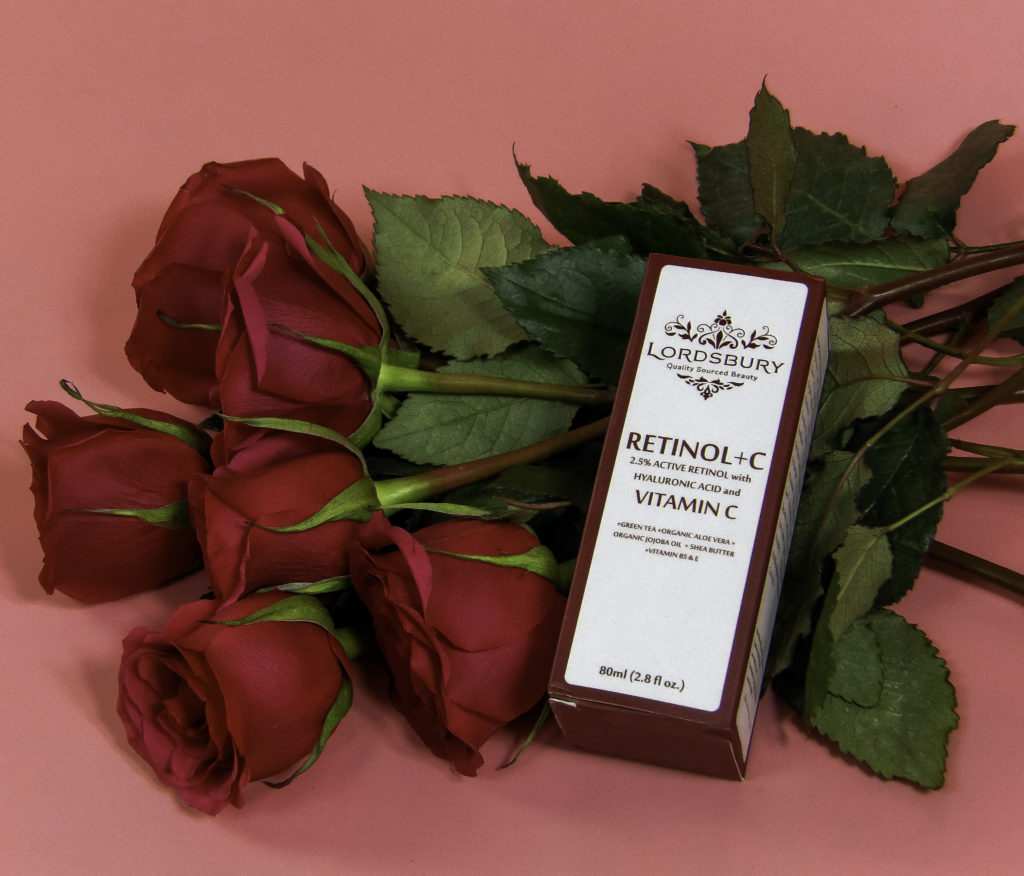
Lordsbury Retinol+C Cream Moisturizer comes in a generous 2.8-ounce container

Lordsbury Retinol+C Cream Moisturizer comes in a generous 2.8-ounce container

RETINOL

It seems obvious, but there should be a respectable amount of Retinol in your Retinol product. Prescription levels begin at about 2.5% up to 5%, although some prescriptions are low as 1%. About 2% and up is needed for a Retinol to be effective, but not all Retinol products contain very much Retinol.

VITAMIN C

Vitamin C Serum is Retinol’s BFF, a partner in crime, and all around pal. Vitamin C works in tandem with Retinol to accomplish the same thing but in different ways.
For example, where Retinol refines surface skin texture, Vitamin C builds collagen to strengthen and support the skin so it is as strong as it looks. Retinol fights acne by cleaning out pores and eradicating bacteria-trapping dead skin, Vitamin C reduces acne inflammation and fades post-pimple scarring. Both Retinol and Vitamin C promote collagen, but each is involved at different stages in the collagen production process. Together, they ensure the maximum amount of collagen is produced.

Vitamin C can build collagen even around the delicate eye area

These reasons are why applying Vitamin C and Retinol daily is considered the best anti-aging topical program.

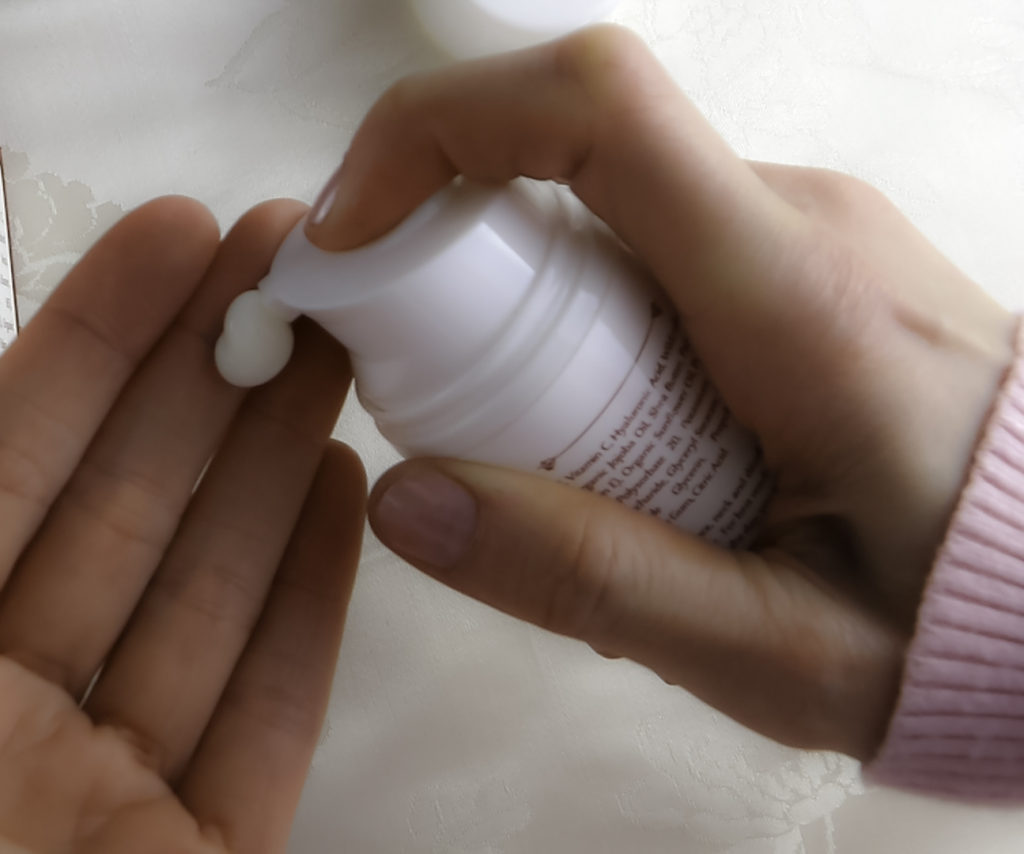
Just one pump of Lordsbury Retinol+C Cream Moisturizer treats the face and throat

HYALURONIC ACID

If you have old acne scars or sun damage and had to pick only one other ingredient for an active ingredient product with Retinol, it would likely be Hyaluronic Acid. Hyaluronic Acid is like your friend with VIP access. First, Hyaluronic Acid holds massive amounts of moisture to plump out wrinkles and fine lines while making skin look dewy and young. But more importantly, Hyaluronic Acid also can pull active ingredients deeper into the skin, including Retinol. The deeper these ingredients get, the better the supporting collagen structure becomes, and even older and darker scars fade.

Hyaluronic Acid makes skin instantly dewy and soft, it plumps wrinkles and helps Retinol sink deeper into skin to address deep wrinkles, scars, and discoloration

Many treating active ingredients, including Retinol and Vitamin C, have molecules that are too large to permeate these skin layers, but somehow, Hyaluronic Acid can bind with Retinol and bring the Retinol into deep skin layers it could not access alone.

What does all this mean? If you have deep scars, wrinkles, discoloration, sun damage, sagging, or stubborn cystic acne, a Retinol product containing Hyaluronic Acid can assist Retinol to treat those deep skin level problems. When Hyaluronic Acid helps Retinol sink into the deeper skin layers, it helps eradicate uneven skin texture and tone, including sun damage and deep scars.

Buffering Agent Moisturizers

It may seem counter-intuitive, but one must buffer Retinol with a gentle, soothing moisturizer, ingredients like Green Tea, Jojoba, or Aloe Vera. Here is why:

For all that Retinol can do, it can also give a pretty nasty accidentally, haphazard self-imposed chemical peel, and the results are not pretty. It’s easy to give oneself an accidental Retinol chemical peel, because skin starts looking so good, that one might feel applying “more is better”, which works for a few days, until suddenly it doesn’t, and your face goes from looking dewy and younger to looking like a bad sunburn.

Even if you follow the directions and only use the prescribed amount of Retinol, skin becomes more sensitive to Retinol after about two weeks, because the old skin is sloughed off, and the new skin is more delicate, yet the same level of Retinol is being applied to skin that isn’t ready to exfoliate yet. This leads to redness and irritation.

HOW TO NOT BURN YOUR SKIN WITH RETINOL

The key to avoiding burning yourself with Retinols, prescription or over the counter, is buffering. To buffer either apply moisturizer first (if you’re very sensitive) or after applying Retinol, and don’t skimp. Buffering allows for the maximum frequency of Retinol use per week. If you still can’t tolerate the peeling and dry skin, apply Retinol for twenty minutes to an hour, then wash it off before bed. This way you at least get some Retinol benefits.

But ideally, your Retinol product comes with built-in buffering moisturizers. We like Lordsbury Retinol+C Cream Moisturizer because it is SO emollient without being greasy. In fact, it’s gentle enough to use twice a day without redness, irritation or dry, flaky peeling.

The moisturizing ingredients make Lordsbury Retinol+C Cream Moisturizer gentle enough to use everyday

Lordsbury Retinol+C Cream Moisturizer contains quality, organic, soothing, nourishing moisturizers including:

  • Wildcrafted Green Tea feeds and moisturizes the skin, calms irritation and is an excellent antioxidant. Green Tea can calm the irritation that Retinol causes
  • Jojoba Oil is very similar to the composition of our natural skin oils, so skin tends to absorb Jojoba very well. As a carrier oil, it enhances the ingredients it is paired with instead of creating a barrier. Made of 98% monounsaturated fats so it can penetrate deeply. Jojoba has a very similar structure to sebum, replacing the natural oils the skin needs to stay healthy and gives skin elasticity and softness
  • Aloe Vera is best known for burn treatment on the skin, but it is highly nutritious to skin with numerous vitamins that the skin can use topically to enhance cell turnover and repair skin cells.
  • Shea Butter can be tricky in some products, as inorganic Shea Butters can tend to make skin breakout. Because of this, you may have had a bad experience with Shea, which is unfortunate since it can both feed the skin and overhaul the skin texture, even on deep burns. If you’re going to apply a product with Retinol, make sure the Shea Butter is organic, such as is found in Lordsbury Retinol+C Cream Moisturizer.
  • Cocoa Butter has long been used for stretch marks because it helps skin remain resilient and elastic. Retinol is also excellent for stretch marks, whether they are in the new “red” stage or older “white” stage. If you’re interested in Retinol for stretch mark repair, Cocoa Butter is an excellent pairing.
  • Vitamin B5 helps soothe and regenerate skin.
  • Vitamin E softens rough skin patches including scars. Retinol refines the texture and fades scarring, while Vitamin E makes the skin more pliable.
  • Organic Sunflower Oil softens the skin and is an excellent carrier oil. It works well with Retinol because it is so hydrating to the skin and can calm red, irritated skin when other products cannot be tolerated.
  • Propolis is a bee product, it fights infections and heals wounds. It allows for an aggressive Retinol and Vitamin C cell renewal program without skin becoming too red, irritated, flaky or raw. Some Retinol programs leave skin dry and peeling; the Propolis helps keep skin at its’ best. If you are allergic to bee products, take note.

Lordsbury Retinol+C Moisturizer contains buffering moisturizers built right in like Aloe Vera, Green Tea, Sunflower Oil, Jojoba and Vitamin E

With a line up of moisturizing buffering ingredients like that, you can see why we use Lordsbury Retinol+C Cream Moisturizer. It is gentle enough to use twice a day without any irritation, even on delicate skin. That is an impressive amount of moisturizing ingredients!

CONCLUSION

There you have it, some of our favorite ingredients for boosting the efficacy of a Retinol product. Pairing Vitamin C helps Retinol do its’ job best, Hyaluronic helps Retinol reach the deeper skin layers to fight sagging, build collagen, and fade deeper scars. Moisturizing ingredients that do not cause breakouts are vital to tolerate any Retinol program. The long list of high-quality moisturizing agents in Lordsbury Retinol+C Cream Moisturizer, paired with prescription strength Retinol and 20% Vitamin C makes it an ideal all-in-one product for your Retinol needs.

WHERE TO BUY IT

Find Lordsbury Retinol+C Cream Moisturizer at Amazon: https://www.amazon.com/dp/B01M3PSEQX/

Style Chicks received compensation for our time and effort to test this product. However, our experience with the product and the opinions expressed in this review are 100% ours.
Posted by Style Chicks / Filed In: Anti-Aging, Skincare
Tagged: Lordsbury Retinol+C Cream Moisturizer, Retinol, Skincare

Why Pair Retinol with Vitamin C and Hyaluronic Acid

October 23, 2017 · 7 Comments

Here at Style Chicks, we talk about Retinol a lot. A lot, a lot, a lot. And for good reason, as recently discussed, it treats acne to wrinkles and everything in between. And for all our jabbering about how Retinol can single-handedly do all the things, why do we still think it should be paired with Vitamin C Serum and Hyaluronic Acid? Because Vitamin C and Hyaluronic Acid make Retinol do all the things faster, deeper and better. My Dermatologist recommended using Retinol and Vitamin C daily for optimal collagen production and anti-aging benefits. Read on to learn why Retinol, Vitamin C, and Hyaluronic Acid are the Three Amazing Amigos of Skincare.

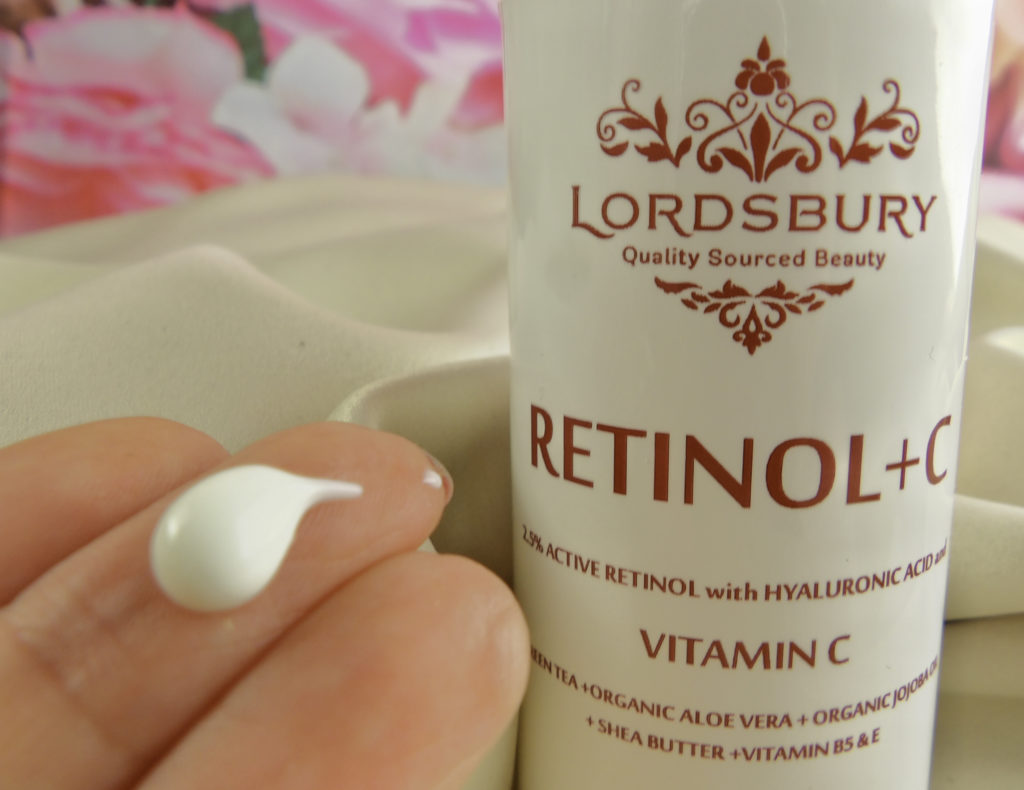
Just a small dollop of Lordsbury Retinol+C Cream Moisturizer combines the power of Retinol, Vitamin C, Hyaluronic Acid, plus a rich moisturizing cream suitable for the eyes, face, and throat

Retinol, for those of you new to Style Chicks, is one of our favorite beauty weapons. Retinol refines skin texture, it breaks up discoloration, it quells acne and reverses skin damage. It eradicates dead skin like a slow-mo chemical peel leaving younger, dewy skin in its place. And as an unexpected bonus, blackheads practically leap out of your face and very few ever return because those pores are empty and stay empty. But there are two other active ingredients that when used in conjunction with Retinol can help it work even better, that being Vitamin C Serum and Hyaluronic Acid.

VITAMIN C AND RETINOL

Vitamin C Serum, the topical form of Vitamin C, delivers Vitamin C to the surface layers of the skin. In doing so, it lightens discoloration, helps reverse sun damage and helps quell acne. Sound familiar? Why yes, it sounds an awful lot like what Retinol does. Then why bother using both? Because Vitamin C is the Ying to Retinol’s Yang, accomplishing the same general task but in a different way so that together, they complete the job. Some examples:

  • Where Retinol tackles discoloration by breaking apart the dark pigment, Vitamin C fades any discoloration and does especially well on smaller specks of scars, age spots, and sun damage.
  • Where Retinol refines the texture of skin so it looks strong, Vitamin C builds collagen to strengthen and support it so it is strong.
  • Retinol fights a pimple from happening by cleaning out pores and eradicating bacteria-trapping dead skin, Vitamin C reduces the inflammation that makes small blemishes into big ones.
  • Both Retinol and Vitamin C help promote collagen, but each are involved at different stages in the collagen production process. Together, they ensure the maximum amount of collagen is produced.

The point of all this is these two ingredients accomplish the same end result, but in ways that the other one can’t. And together, they really get things done well. What a team!

Lordsbury Retinol+C Moisturizer contains BOTH Retinol and 20% Vitamin C Serum for TWICE a day use with ZERO irritation

Hyaluronic Acid and Retinol

Retinol quickly exfoliates and resurfaces the top layers of the skin. After a few weeks, many of us make the same mistake: “If a little Retinol is good, then MORE will be better!” Then the redness and irritation come. Applying a larger amount Retinol won’t get it deeper into your skin, it can only burn the surface layers. But when Retinol is paired with Hyaluronic Acid, it can reach deeper layers of the skin.

Hyaluronic Acid is a naturally present in the human body. It also comes in creams and serums, such as found in Lordsbury Retinol+C Cream Moisturizer. Hyaluronic Acid makes skin instantly dewy and soft, it plumps wrinkles and helps Retinol sink deeper into skin to address deep wrinkles, scars, and discoloration

Hyaluronic Acid is another Style Chicks favorite ingredient because it has the unique capability to absorb enough moisture to plump the skin. It also is a small enough molecule that it can penetrate deeper skin layers. This means any active ingredient, like Retinol and Vitamin C, when paired with Hyaluronic Acid can slip into these deep skin layers like it has a guest VIP pass, meaning Retinol paired with Hyaluronic Acid can tackle even very deep, old scars and sun-damaged layers of skin.

The deeper these ingredients get, the better the supporting collagen structure becomes, and even older and darker scars fade. When Hyaluronic Acid helps Retinol sink into the deeper skin layers, it helps eradicate uneven skin texture and tone, including sun damage and deep scars.

TIP: If you have acne, old scars, sun damage or wrinkles that even glycolic peels do not make a major dent into, then the damage is deep in the skin and a Hyaluronic/Retinol combo can be very helpful to your type of skin problems.

You can purchase Hyaluronic Acid and Retinol separately and apply them both at the same time, or you can use a Retinol that already contains Hyaluronic Acid, such as Lordsbury Retinol+C Cream Moisturizer. I also prefer Lordsbury Retinol+C Cream because all of us are tempted from time to time to slather on a bit too much Retinol, and since Lordsbury+C Cream Moisturizer has so many buffering emollient ingredients, it’s almost impossible to over-do it. Whereas with a prescription Retinol, it’s very easy to irritate the skin.

Lordsbury Retinol+C Retinol Cream moisturizer has a beauty powerhouse of ingredients

Lordsbury Retinol+C Retinol Cream moisturizer has several moisturizing ingredients so it is gentle enough for daily use

DERMATOLOGIST RECOMMENDATION FOR SKIN OVER THIRTY

My dermatologist told me that especially for skin over 30, the standard is Vitamin C during the day and Retinol at night, and apply a moisturizer on top, plus eye cream. This combo is effective but somewhat drying, and it is time-consuming to have so many layers of product.

I found it far most cost-effective and practical to just apply one product, Lordsbury Retinol+C Cream Moisturizer, which contains 2.5% Retinol, 20% Vitamin C Serum, Hyaluronic Acid, and a host of buffering moisturizers to tolerate the potent ingredients, including Wildcrafted Green Tea, Jojoba Oil, Sunflower Oil, Shea Butter, and Aloe Vera. These buffering moisturizers enable me to even use it even around my delicate eye area and throat twice a day.

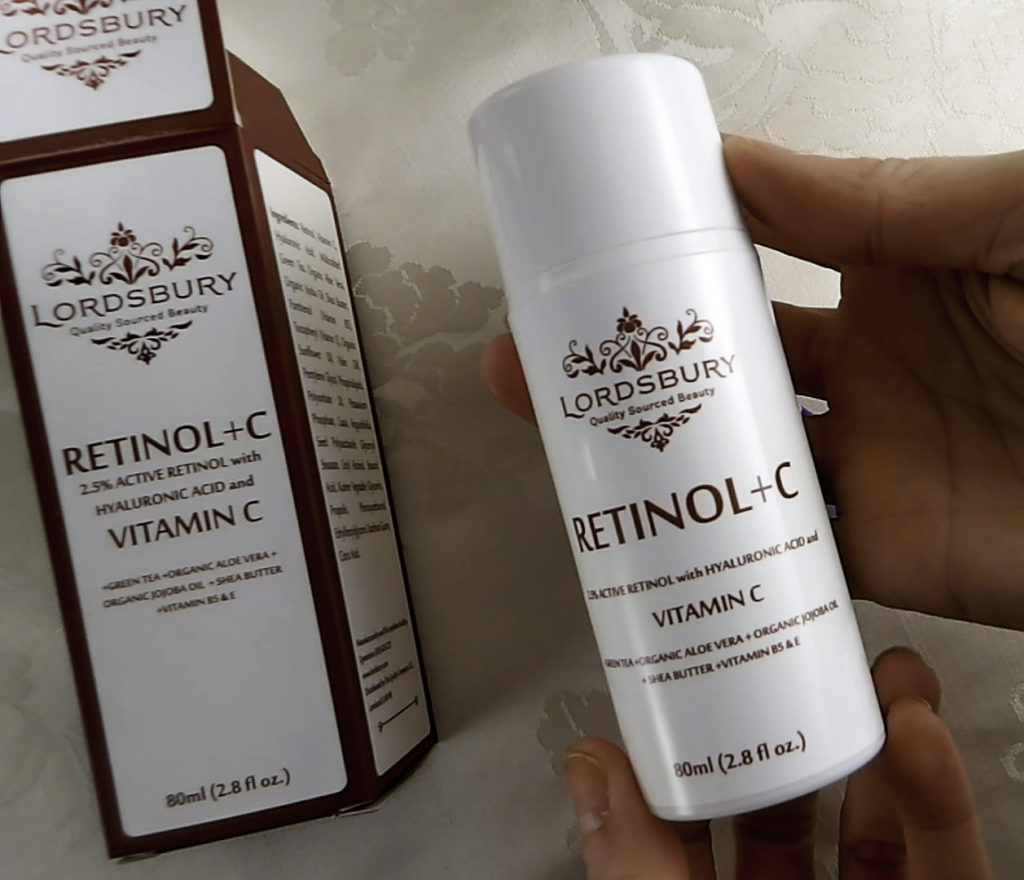
One pump is all you need for face, neck and decolletage.

One pump of Lordsbury Retinol+C Cream Moisturizer is all you need for face and eyes to get a prescription strength Retinol, 20% Vitamin C, Hyaluronic Acid to make it work overtime, and a host of moisturizers that even buffer the delicate eye area from irritation.

CONCLUSION

Retinol can work wonders, but Vitamin C and Hyaluronic Acid can make a good thing even better by perfecting the tasks Retinol does well and enabling Retinol to access the deeper skin layers where old scars and sun damage may lurk. Hyaluronic Acid also helps Vitamin C and Retinol produce collagen at the deeper layers of the skin, which enables better support against wrinkles and sagging. Lordsbury Retinol+C combines all three ingredients together with many natural, soothing moisturizers, for a one-stop, all-in-one moisturizing treatment trifecta.

WHERE TO BUY IT

Find Lordsbury Retinol+C Cream Moisturizer at Amazon here:
https://www.amazon.com/dp/B01M3PSEQX/ref=as_li_ss_tl?ie=UTF8&linkCode=ll1&tag=lordsbury-20&linkId=80ce0c85b497e19a5480f6b096cc3147

Style Chicks received compensation for our time and effort. However, our experience with the product and the opinions expressed in this review are 100% ours.
Posted by Style Chicks / Filed In: Skincare
Tagged: Hyaluronic Acid, Lordsbury Retinol+C Cream Moisturizer, Retinol, Vitamin C

Multi-Tasking Retinol: Retinol uses: Acne and Dark Undereye Circles

October 10, 2017 · 1 Comment

This is part two of a two-part series about the Multi-tasking uses of Retinol, the go-to beauty product to fix numerous skin issues ranging from stretch marks to acne to wrinkles. Today we discuss both acne and dark undereye circles, and why Lordsbury Retinol+C Cream Moisturizer, a 2.5% non-prescription Retinol is a powerhouse for treating them both.

Lordsbury Retinol+C Cream Moisturizer contains natural moisturizers to soothe while treating acne and dark circles

ACNE & RETINOL

Retinol is especially effective on acne. No matter what age you get your acne, Retinol can tackle it.

Whether you are a teen, in your twenties or even post-menopausal, acne happens. But how acne is best-addressed changes with age. Teens generally use oil-drying cleansers combined with a heavy layer of benzoyl peroxide, both of which are too rough for more mature skin because it cannot recover moisture like younger skin.

At the first sign of an emerging pimple, apply a buffered Retinol like Lordsbury Retinol+C to reduce inflammation and redness without causing surface dryness or irritation

But this is not to say that Retinol cannot be overly drying to the skin, as it’s in fact, quite a potent topical acne remedy. So potent, that only a pea-sized amount should be used on the entire face. Even in small doses, prescription strength retinols need to be buffered with a cream or lotion to ease the dryness and itchiness that can come with Retinol. This is one of our favorite things about Lordsbury Retinol+C Cream Moisturizer for treating acne because it comes with an all-in-one 2.5% prescription strength pure Retinol and several soothing ingredients built right into the formulation to buffer the retinol with just the right balance. Natural ingredients include Organic Aloe Vera and Shea Butter that keep skin supple and pliable to help pre-empt stretch marks before they form. Also, there’s Green Tea that soothes irritation. Even when I use it twice a day, I don’t experience peeling, itching or dryness, yet it effectively targets acne.

Lordsbury Retinol+C Moisturizer has soothing and hydrating moisturizers that buffer BOTH the prescription strength 2.5% Retinol and the 20% Vitamin C Serum to quickly reduce acne breakouts and heal acne mark scars

HOW IT WORKS

Retinol is a keratolytic treatment that dissolves dead skin layers. In laypersons’ speak, this means Retinol unclogs pores. This has a two-fold benefit of allowing other medications creams and gels, such as Vitamin C Serum or Salyclic Acid to more effectively treat the pore by cleaning it, removing bacteria and oil and shrinking its’ appearance. Retinol also reduces the number of blackheads and pimple outbreaks by preventing dead cells from clogging pores or entrapping bacteria and oil which form said blackheads and pimples.

Retinol unclogs pores so well that after about two weeks of Retinol use, users report a sudden acne breakout, often it is so bad that people feel Retinol is causing their acne. It’s not causing acne, rather purging pores. If you can hold on for just a few weeks, your skin will be clear and less congested.

USING RETINOL DURING A PIMPLE LIFE CYCLE

Retinol can also reduce inflammation and redness, which is a big part of what makes a pimple look so large.  At the first sign of a pimple, dab an extra bit of Lordsbury Retinol+C on the pimple to start reducing inflammation and quell the redness without causing a dry, crusty skin layer that is itchy.

POST PIMPLE HEALING

Retinol also encourages the formation of collagen, which helps the skin to heal, and it redistributes excess or abnormal pigmentation, meaning skin takes on a more even tone. This is why, in part, it addresses so many skin problems.

CYSTIC ACNE

Cystic Acne scars live on long after a pimple itself came and went, and the scar mark turns red then brown then after about six months fades to its’ final state of discoloration. Even if you are very careful not to pick, squeeze, poke or otherwise irritate these tricky cystic pimples, some are little jerks and just leave a scar anyways. The faster you can fade the scar, the better. Retinol tackles uneven skin tone and accelerates the healing process, breaking up the dark pigmentation of a red or brown scar. I particularly like Lordsbury Retinol+C Cream Moisturizer.

Got some discoloration from an old acne scar? Applying Lordsbury Retinol+C Cream Moisturizer to acne scars  helps quickly fade them and heal the skin texture without causing irritation

ACNE ON THE BODY

Acne on the body, especially the back, can be tough to treat. Benzoyl Peroxide, while effective and inexpensive, is often unsuitable for back acne, AKA “bacne” because it can bleach the fabric of clothing. Lordsbury Retinol+C Cream Moisturizer dries down clean without a greasy finish so it can be applied to your back acne with no residue and is safe to wear even with nicer clothing. It also comes in a large 2.8-ounce container, large enough to apply liberally to acne prone areas such as shoulders, chest, and back.

RETINOL & UNDER EYE DARK CIRCLES

Dark under eye circles happen for many reasons: allergies, heredity, lack of sleep, and at times, leaking blood capillaries under the skin that creates a purple hue. The undereye skin area, being so thin, is also subject to the effects of sun damage.

Retinol breaks up excess pigmentation and disperses it to make the skin tone appear even. It’s also exceptionally effective in reversing the appearance of sun damage. But for some dark circle undereye conditions, the best that can be done is minimizing their appearance by optimizing the condition of the skin by keeping it wrinkle free and as hydrated as possible.

Part of what contributes to the appearance of a dark undereye circle is skin sagging and the resulting shadow. Collagen is the scaffolding of the skin, if there’s not enough collagen to support skin tissues, skin sags under the weight. Skin loses collagen with age, especially around the eye area. Retinol promotes collagen production and in tandem with topical Vitamin C, can reduce the sagging and discoloration substantially.

You likely cannot substantially eradicate hereditary dark shadows, but you can remove as much sun exposure and skin damage as possible to lighten, smooth and brighten the area and you can boost the collagen levels to lift the skin upwards for a younger, brighter look. Lordsbury Retinol+C Cream Moisturizer contains Aloe Vera which feeds the skin like a vitamin, providing a dewy look over time that is smooth and reflects light, giving a lighter appearance. Vitamin C builds collagen and lightens the skin without bleaching it to an unnatural color, as can happen with some chemical peels or laser treatments.

Lordsbury Retinol+C Cream Moisturizer contains 20% Vitamin C Serum to build collagen, fade both discoloration and sun damage around the delicate eye area

TIP: To not irritate the delicate eye skin, only apply retinol as high as all along the orbital bone of the dark circle, below the eye bulge up to the brow.

CONCLUSION

Ranging from stretch marks, facial and body acne, dark undereye circles, wrinkles or discoloration due to sun damage, age spots, scars, discoloration or acne marks, Lordsbury Retinol+C Cream Moisturizer provides a powerful combination of a 20% Vitamin C Serum paired with a prescription level dose of 2.5% Retinol and all natural buffering moisturizers in one 2.8-ounce cream at a great price. Gentle enough for even sensitive skin, but potent enough to make a sizable difference in skin problems in short order.

WHERE TO BUY IT

Find Lordsbury Retinol+C Cream Moisturizer at Amazon here:
https://www.amazon.com/dp/B01M3PSEQX/

Style Chicks received compensation for our time and effort to write this review. However, our experience with the product and the opinions expressed in this review are 100% ours.
Posted by Style Chicks / Filed In: Adult Acne, Anti-Aging, Skincare
Tagged: Acne, Dark Circles, Lordsbury Retinol+C Cream Moisturizer, Retinol

Multi-Tasking Uses of Retinol Series: Retinol for Stretch Marks, Acne, Wrinkles, and Discoloration

September 25, 2017 · Leave a Comment

If you were stranded on a desert island with only one skincare treatment product, what would it be? If your answer is Retinol, you made an excellent choice: Retinol treats so many skin care problems that it is a true-multitasker. Retinol treats a host of skin care issues regardless of your age. This week in a two-part series we cover five primary Retinol skin care uses that are game-changers for your skin. Today we cover how to use Retinol for stretch marks, wrinkles, and discoloration.

Lordsbury Retinol+C Moisturizer tackles a host of skin care problems including Acne, Stretch Marks, Wrinkles, Discoloration, and Dark Circles. It contains all-natural retinol-buffering moisturizers built right in like Aloe Vera, Green Tea, Sunflower Oil, Jojoba and Vitamin E as well as 20% Vitamin C.

RETINOL FOR STRETCH MARKS

As mentioned in our recent article “Skin Care for Busy Moms“, Stretch marks are often associated with pregnancy but also happen during weight loss or gain and even if a teen grows quickly, small stretch marks can appear. Stretch marks can also occur as a side effect of steroid use, and some medical conditions, such as diabetes cause stretch marks due to inflammation and thinning of the skin.

Regardless of their source, Retinol is amazing at tackling stretchmarks whether they are currently forming, new or several years old.

HOW IT WORKS
Retinol encourages the formation of collagen, which helps the skin to heal, and it redistributes excess or abnormal pigmentation, meaning skin takes on a more even tone. Few products can address a stretch mark once they appear lighter than the rest of the surrounding skin like Retinol can.

Attacking stretch marks while they are still dark (sometimes red or even purple) is the best plan of attack, combining Retinol directly all over the skin, focusing in on the line-like marks, with a moisturizer like Cocoa Butter or Shea Butter and preferably a skin nourisher like Aloe Vera. We like Lordsbury Retinol+C Cream Moisturizer for stretch marks for several reasons. It combines 2.5% pure retinol with 20% Vitamin C (also important for collagen formation) plus skin nourishers including Aloe Vera and Shea Butter that keep skin supple and pliable to help pre-empt stretch marks before they form.

We also like Lordsbury Retinol+C Cream Moisturizer because Retinol Stretchmark treatments are surprisingly expensive, often costing more than similar treatments intended for the face. A quick Google search gave results in the $60-$90 range for Retinol products intended for stretchmarks, whereas Lordsbury Retinol+C costs a fraction of that, contains natural and superior ingredients and comes in a huge 2.8-ounce bottle. For treating stretch marks, it is tough to beat this combination at this price point. Another good feature of Lordsbury is that it contains Shea Butter, a traditional stretch mark remedy that heals and softens skin, but it is not sticky or greasy when used within the Lordsbury formulation, which dries down clean and can be worn under clothing to treat stretch marks.

HOW LONG DOES IT TAKE?
Reports of Dermatological studies indicate women with severe cases of post-pregnancy stretch marks obtained meaningful results within six months, many seeing results sooner. While this may feel like a long time, even if it takes the full six months, if you start now, your stretch marks will be fixed by beach weather next summer!

Lordsbury Retinol+C Moisturizer

Lordsbury Retinol+C Moisturizer comes in a huge 2.8 ounce size bottle for far less than the price of many Stretch Mark creams that contain only a fraction of the active ingredients contained in Lordsbury

RETINOL FOR WRINKLES

Wrinkles are caused by repetitive facial movements and skin sagging. Delicate skin areas wrinkle first because they have less support when sagging starts to occur. The best defense is 1) to keep the formation of the skin as strong as possible to bear the weight of said sagging, and 2) to mitigate the appearance of existing wrinkles by smoothing their surface and lightening them.

Collagen is the scaffolding of the skin, if there is not enough collagen, it is like pulling bricks out of a wall, eventually, it starts to sag under the weight. Skin loses collagen as we age, and we don’t replace it fast enough to avoid sagging. Fortunately, Retinol promotes the collagen production process regardless of our age, and in tandem with topical Vitamin C, can reduce the sagging surrounding the wrinkle, alleviating the weight of unsupported skin. This over time reduces the wrinkle.

WRINKLE DISCOLORATION: Wrinkled skin also tends to gain discoloration, especially in the receded valley of the wrinkle, effectively creating a shadow. With consistent retinol use, discoloration fades, and the valley of the wrinkle visually appears less dark and thereby less deep.

SMOOTHER WRINKLE SURFACE: Retinol also improves the appearance of the wrinkle by refining the texture of the skin, making existing wrinkles look smoother. If your wrinkles look better after a peel or exfoliation, then Retinol is likely to make your wrinkles appear finer and less noticeable.

DISCOLORATION & UNEVEN SKIN TONE

Whether from acne marks, scarring, or sun damage most of us experience some form of discoloration on our faces. As mentioned before, Retinol breaks up excess pigmentation and disperses it to make the skin tone appear even. But some discoloration is in the deeper layers of the skin, making many topical lightening products incapable of effecting meaningful change. If your discoloration is from sunbathing from years ago, or from very old, darkened acne marks that won’t fade, then they are likely discoloration found deeper in the skin and require a combination of Retinol and Hyaluronic Acid to affect results.

Hyaluronic Acid has the unique capability to absorb moisture to plump the skin, it also is a smaller enough molecule that it can slip into deeper skin layers. This means any active ingredient paired with Hyaluronic Acid can slip into these deep skin layers like it has a guest VIP pass, meaning Retinol paired with Hyaluronic Acid can tackle even very deep, old scars and sun-damaged layers of skin. You can purchase Hyaluronic Acid and Retinol separately and apply them both at the same time, or you can use a Retinol that already contains Hyaluronic, such as Lordsbury Retinol+C Cream Moisturizer.

Lordsbury Retinol+C Cream Moisturizer contains Retinol to accelerate cell regeneration to fade old discoloration, and Vitamin C to prevent future discoloration, and Hyaluronic Acid to aid in deep absorption. It also contains several natural moisturizers to soothe and nourish skin for a more youthful look.

CONCLUSION

Lordsbury Retinol+ C Cream Moisturizer contains natural organic ingredients to soothe and nourish skin while treating common stubborn skin problems such as stretch marks, discoloration, and wrinkles. In our next article, find out how Lordsbury Retinol+C Cream Moisturizer can also be a powerhouse beauty secret for also treating acne and dark circles. Stay tuned!

WHERE TO BUY IT

Find Lordsbury Retinol+C Cream Moisturizer at Amazon here:
https://www.amazon.com/dp/B01M3PSEQX/ref=as_li_ss_tl?ie=UTF8&linkCode=ll1&tag=lordsbury-20&linkId=80ce0c85b497e19a5480f6b096cc3147

Style Chicks received compensation for our time and effort. However, our experience with the product and the opinions expressed in this review are 100% ours.

Posted by Style Chicks / Filed In: Anti-Aging, Skincare
Tagged: discoloration, Lordsbury Retinol+C Cream Moisturizer, Retinol, Stretch Marks, Wrinkles

  • Newer Entries
  • 1
  • 2
  • 3
  • Previous Entries

Search Style Chicks

Pages

  • About the Style Chicks
  • Contact Us
  • Discontinued Clinique Products Guide Lost Clinique You Love
  • The Best Beauty Ingredients You Will Love Glossary Guide

Review + Guide Topics

  • Accessories
  • Adult Acne
  • Anti-Aging
  • Beauty
  • Beauty Expert Advice
  • Beauty Tools + Devices
  • Better Beauty Sleep
  • Black Friday & Cyber Monday
  • Body
  • Clean Beauty
  • Cosmetics
  • Curly Hair Care
  • Decor
  • Discontinued Products
  • Entertaining
  • Essential Oils
  • Exercise
  • Fashion
  • Featured
  • Food
  • For the Home
  • Fragrance Free
  • Gadgets
  • Gifts
  • Green Beauty
  • Gym Beauty Bag
  • Hair
  • Hair Care Devices & Tools
  • Hair Growth
  • Hair Growth Devices
  • Haircare
  • Health
  • How to
  • How to…
  • Ingredient Glossary
  • Ingredient Guides
  • J-Beauty
  • Jewelry
  • K-Beauty
  • Life Hacks
  • Lifestyle
  • Makeup
  • Makeup Tools & Brushes
  • New Products
  • News
  • Organic
  • Pre-Shampoo Hair Treatments + Conditioning Remedies
  • Product Review
  • Product Updates
  • Science of Beauty
  • Science of Skincare
  • Sensitive Skin
  • Sephora
  • Shoes!
  • Skin Tools & Devices
  • Skincare
  • Spa Economy
  • Style
  • Tea
  • Technology
  • Things I want
  • Travel
  • Unscented
  • Vanity Table
  • Waterless Beauty
  • Weddings

Welcome to Style Chicks

Since 2007, we are your trusted source for expert hair and skincare reviews, in-depth ingredient guides, and info on hard-to-find and discontinued beauty products. Whether you're looking for smarter skincare choices, hair growth options, clean beauty cosmetics reviews, ingredient glossary, better beauty sleep, hair care tips, beauty how-to guides or trying to track down your holy grail favorite, we’ve got you covered.


Copyright © 2007 - 2025 STYLE CHICKS